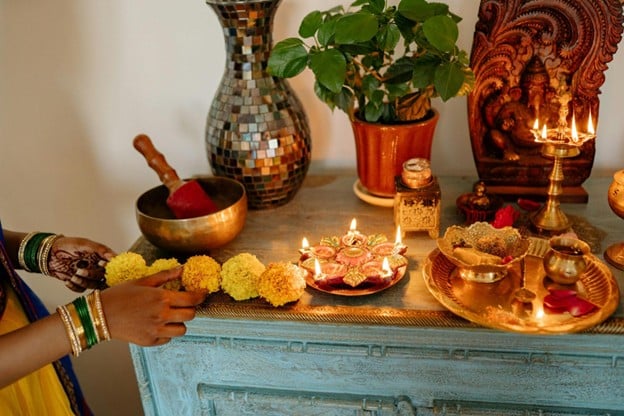
Diwali, the festival of lights is a celebration of color and sparkle. It is a time to welcome clarity, prosperity and divine blessings into our homes. Every diya we light and every flower we place carries an intention to renew energy.
According to Vastu Shastra, when your home aligns with the rhythm of nature, it radiates balance and abundance. By following a few simple Vastu tips during Diwali and other festivals, you can create an atmosphere filled with joy.
Preparing the Home: Cleanse, Declutter and Refresh
Before the festive season begins, cleansing your home is one of the most powerful rituals. It’s about dusting surfaces and releasing old, stagnant energy and inviting new beginnings.
Start by clearing unnecessary items from every room. Mop the floors with a mixture of water, sea salt, a pinch of turmeric and camphor to purify the space. Light incense or camphor in the corners to refresh the air. These small acts help your home breathe freely and feel vibrant even before the celebrations begin.
Lighting Diyas and Lamps: Spread the Glow of Positivity
Light represents awareness and abundance. When you place diyas thoughtfully, you enhance the flow of positive energy. The north and east directions are ideal for lighting diyas during Diwali. They draw in light and prosperity.
Keep diyas near the entrance, balcony, or window sills so that their gentle glow welcomes harmony. Brighten dark corners with small lamps or candles to create a warm and balanced atmosphere throughout your home.
Rangoli and Entrance Décor: Where Blessings Step In
The entrance of your home sets the tone for everything that follows. According to Vastu, it is where divine energy first enters. Create your rangoli near the main door, ideally facing the east or north. Use natural colors or flower petals for a soft, pleasing effect.
Place a diya on both sides of the entrance and ensure the pathway remains open and welcoming. Fresh torans made of mango leaves or marigold flowers also invite auspicious energy and joy.
The Puja Space: Aligning with Divine Energy
During Diwali and other festivals, the puja room becomes the heart of the home. The best place for your altar is the east direction. Place idols or pictures of deities so they face east.
Light your first diya in this space and spend a few moments in gratitude. It is said that when prayers are offered with a calm and focused mind, the entire home feels uplifted.
Festive Décor and Colors that Uplift Energy
Vastu recommends using bright yet soothing shades during festivals. Gold, white, yellow and orange are especially auspicious as they represent purity, clarity and abundance.
Decorate with natural flowers, earthen lamps and metallic diyas for an authentic, grounding touch. Use warm, gentle lights that radiate comfort. Every simple effort you make with love carries its own divine energy.
After the Celebrations: Keep the Energy Flowing
When the festival concludes, continue nurturing your home’s positive energy. Keep one diya or lamp burning in your puja space each evening as a gentle reminder of light within. Open windows daily for sunlight and fresh air. Add soft fragrance through sandalwood, jasmine, or rose to maintain peace and balance.
These mindful habits help your home stay calm and joyful long after the festival ends.
Celebrate with Awareness and Gratitude
Every festival reminds us that light grows where there is awareness. When you decorate your home with intention and care, Vastu becomes a natural part of the celebration.
May this Diwali and every festival bring light that brightens not just your home, but your heart too. To explore more home harmony tips, read about how Vastu Yantras in Your Home bring abundance in your life.
Frequently Asked Questions
Where should diyas be placed during Diwali as per Vastu?
Place diyas in the north or east direction and near the main entrance. This attracts prosperity and invites the blessings of light into your home.
What is the best direction for puja during Diwali?
The puja room should be in the north-east corner. Sit facing east while offering prayers for balance and harmony.